Signed in as:
filler@godaddy.com

Are your current processes helping your business operate as efficiently, consistently and profitably as possible?
Every organisation has processes—from manufacturing and production through to purchasing, quoting, sales, customer service, finance, administration and human resources. Well-designed processes help every part of your business work together more efficiently.
Good process design creates better businesses—not unnecessary bureaucracy.
Every successful organisation relies on well-designed processes. From quoting and purchasing through to manufacturing, logistics and customer service, effective processes improve consistency, eliminate waste and help people perform at their best.
Whether you're developing a new manufacturing process, improving an office workflow or redesigning the way your business operates, effective process design provides the foundation for increased productivity, improved quality and sustainable business growth.
The Manufacturing Engineer (TME) works with organisations to analyse, simplify and improve business, manufacturing and operational processes. Rather than creating complicated flowcharts or excessive documentation, our focus is on designing practical, easy-to-follow processes that integrate with the way your business already operates. Good process design creates clarity. People understand what is expected, managers have confidence in consistent outcomes, and the business becomes easier to operate, measure and continually improve.
Every organisation has processes—whether they're formally documented or not. The difference is that well-designed processes are deliberate. They clearly define responsibilities, improve communication, reduce variation and help people consistently achieve the desired outcome.
What makes an effective process?
Effective process design is the deliberate planning, development and continual improvement of the way work is carried out. It ensures people, equipment, information and resources work together efficiently to consistently achieve the desired outcome.
It's not about documentation
The real value of process design isn't creating procedures or flowcharts—it's designing better ways of working that improve productivity, reduce waste, strengthen consistency and make everyday operations easier for your people.
✓ Improve productivity and efficiency
✓ Reduce waste & non-value-added activity
✓ Improve quality and consistency
✓ Simplify training and onboarding
✓ Reduce errors and rework
✓ Improve communication & accountability
✓ Support continual improvement
✓ Build scalable business processes
How TME Can Help
• Business Process Mapping
• Manufacturing Process Design
• Workflow Analysis & Improvement
• Lean Process Improvement
• Standard Operating Procedures (SOPs)
• Visual Work Instructions
• Value Stream Mapping
• Office & Administrative Processes
• Digital Workflow Design
• Process Documentation
• Continuous Improvement
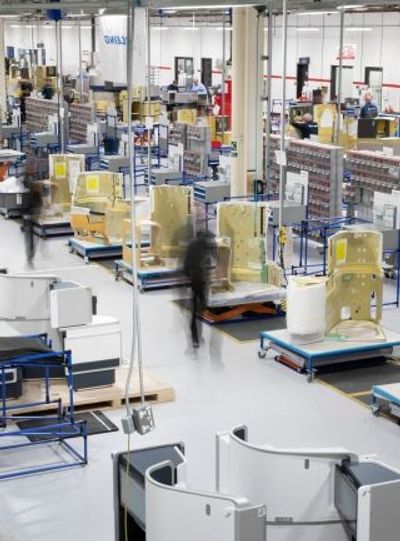
"Our products travel all over the factory. Operators are constantly walking to collect parts, chasing shortages and moving between jobs instead of adding value. Work-in-progress builds up between operations, some machines become bottlenecks while others sit idle, and every shift seems to run differently. The most experienced operators somehow keep everything moving, while others struggle, leading to inconsistent methods, varying productivity and avoidable inefficiencies."
Manufacturing process design focuses on creating the most efficient, repeatable and productive way to manufacture a product. By analysing how work, people, materials and information move through the factory, processes can be redesigned to eliminate waste, improve flow and maximise the value created at every stage of production.
This may involve improving factory layouts, reducing unnecessary movement, optimising material presentation and parts delivery, balancing workloads between operations, reducing work-in-progress, supporting single-piece flow where appropriate, improving takt and cycle time alignment, standardising work methods, improving visual management and applying Lean manufacturing principles to create a safer, more efficient and more productive manufacturing environment.
"Customer enquiries are handled differently depending on who receives them. Important information is missed during quoting, production isn't consulted before delivery dates are promised, and sales orders often require clarification before work can begin. Product changes aren't always communicated effectively, resulting in rework, delays and confusion across departments. Customer issues are resolved differently by each person, and valuable feedback isn't consistently captured or used to improve the business."
Business process design focuses on creating simple, efficient and repeatable ways of working that improve communication, consistency and customer satisfaction. By analysing how information flows between people, departments and business systems, processes can be redesigned to eliminate unnecessary effort, reduce delays and ensure the right information reaches the right people at the right time. Effective business process design also considers how software applications such as CRM, ERP, accounting, job management and document management systems support and automate the way your business operates.
This may involve improving tendering and quotation processes, streamlining sales order processing, strengthening product design and engineering workflows, improving engineering change management, developing customer service procedures or integrating business applications such as CRM, ERP, Xero, MYOB, SharePoint, Power Automate and other business systems to create a seamless flow of information from the first customer enquiry through to product delivery, customer support and continual improvement.

"Good people are getting harder to find, and when experienced people leave, years of knowledge can walk out the door with them. How do we capture what our best people know, develop others faster and create an operation where people feel trusted, capable and want to stay?"
process capture, procedures, standard work, competency, cross-training, positive leadership, empowerment and succession
"We’ve invested in automation and smarter technology, but sometimes every improvement seems to need another supplier, programmer or system change. How do we get the benefits of automation without making the operation so rigid that we lose the ability to adapt?"
design the operational process around the technology, retain human capability, understand interfaces and exceptions, challenge automation investment and preserve agility
"We’ve invested in ERP, WMS and other business systems, yet somehow Excel spreadsheets, emails and manual workarounds still drive parts of the operation. Are they filling genuine gaps, or have our systems and processes simply stopped reflecting how the work really gets done?"
process integration, workflow simplification, system utilisation, data integrity, low-code tools, automation, information flow, operational visibility and removing workarounds
Operational process design focuses on creating practical, repeatable systems that coordinate the day-to-day operation of the business. Unlike manufacturing processes, which are often driven by production schedules, routings, Kanban systems and automated triggers, operational processes rely on planning, communication, meetings, reports, schedules, systems and clearly defined responsibilities to ensure the right people, equipment, materials and information are available when they're needed. Well-designed operational processes improve coordination, retain knowledge and capability, reduce delays, increase reliability and help people, technology and systems work together effectively.
This may involve improving warehousing and inventory management, streamlining logistics and material handling, developing asset and facility management processes, improving resource planning and scheduling, implementing preventative maintenance systems, capturing operational knowledge and developing workforce capability, integrating automation and technology without losing operational agility, improving system utilisation and information flow, establishing operational review meetings, defining escalation and communication processes, or designing practical operational procedures that improve visibility, accountability and the effective utilisation of people, equipment and materials across the business.